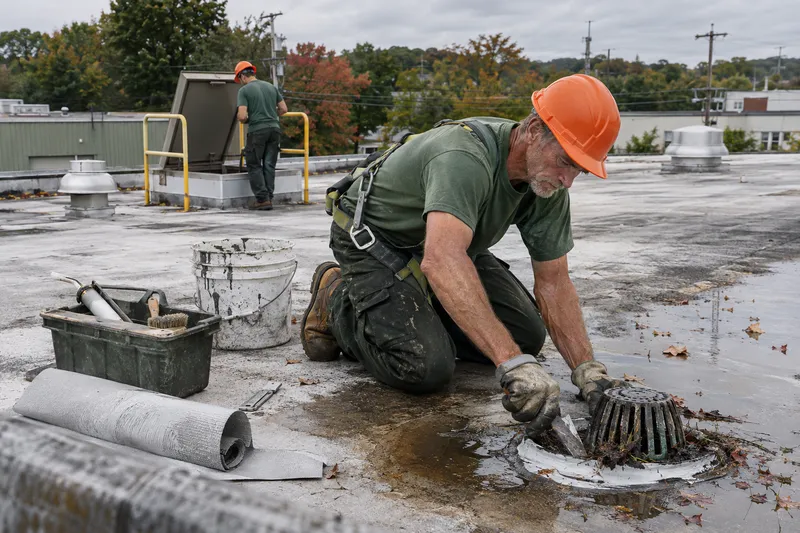
Flat Roof Repair
Membrane patches welded or taped to match TPO, EPDM, and built-up roofs, plus the drain, scupper, and flashing repairs that stop water from backing up at parapets.
Flat roof repair in Bridgeport
Commercial Roofs Only
As a Bridgeport commercial roof repair contractor, we trace leaks to their source and repair flat, metal, and industrial roofs on working buildings.
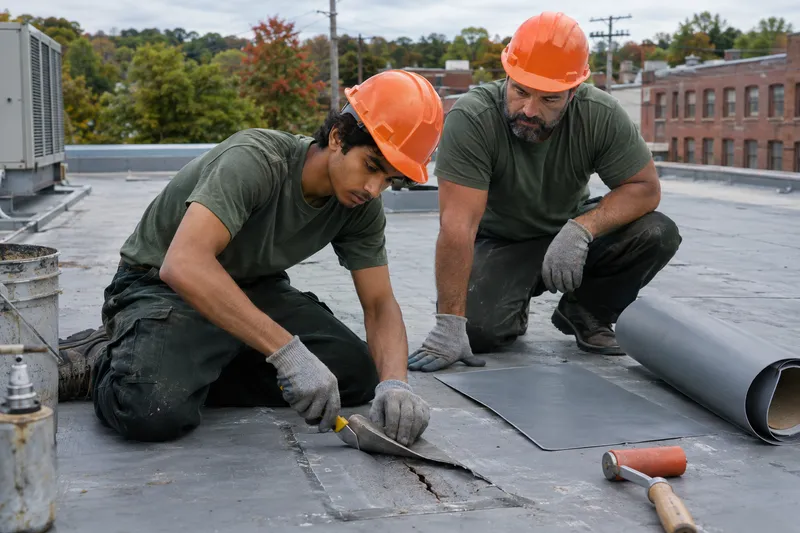
Our Bridgeport commercial roof repair work falls into four services, each matched to the roofs we see on mill buildings, steel warehouses, and plants.
Membrane patches welded or taped to match TPO, EPDM, and built-up roofs, plus the drain, scupper, and flashing repairs that stop water from backing up at parapets.
Flat roof repair in Bridgeport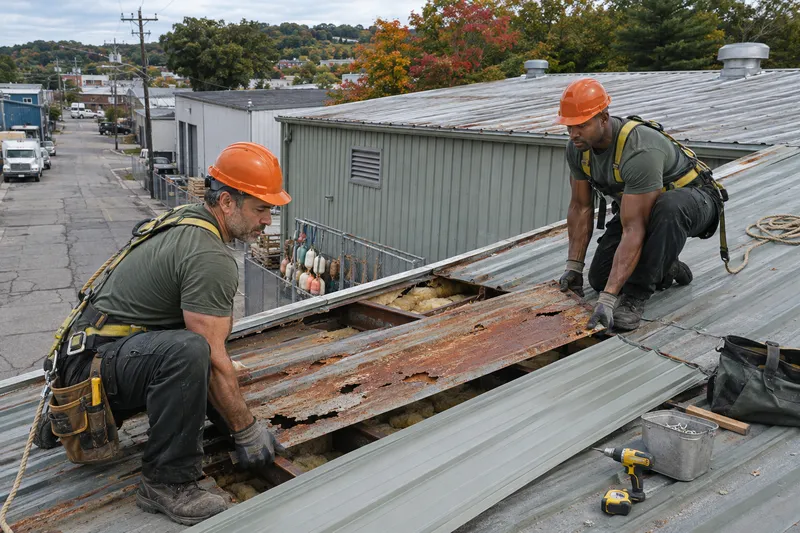
Backed-out screws, open panel laps, and rusted panels on steel shops and warehouses, replaced or resealed so every fastener row stays tight through freeze-thaw.
Metal roof repair in Bridgeport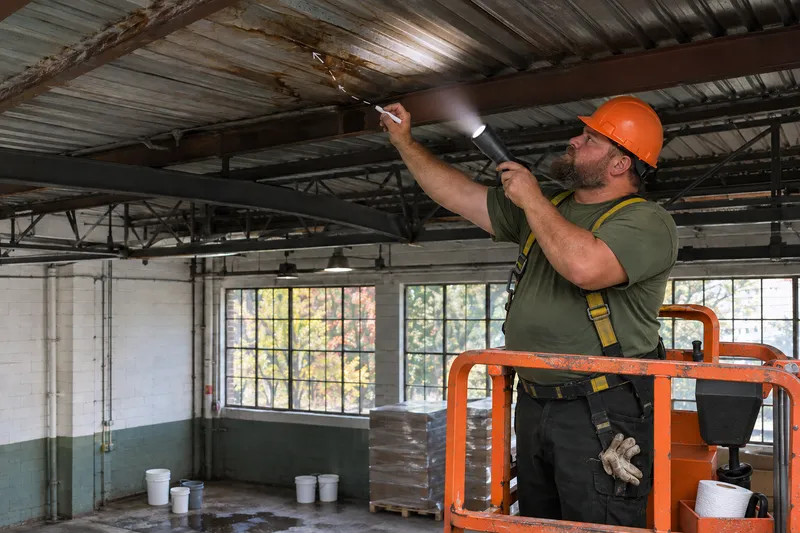
Leaks traced from the ceiling stain to the seam, curb, or drain that lets water in, confirmed with moisture readings or core cuts before anything is cut open.
Leak repair in Bridgeport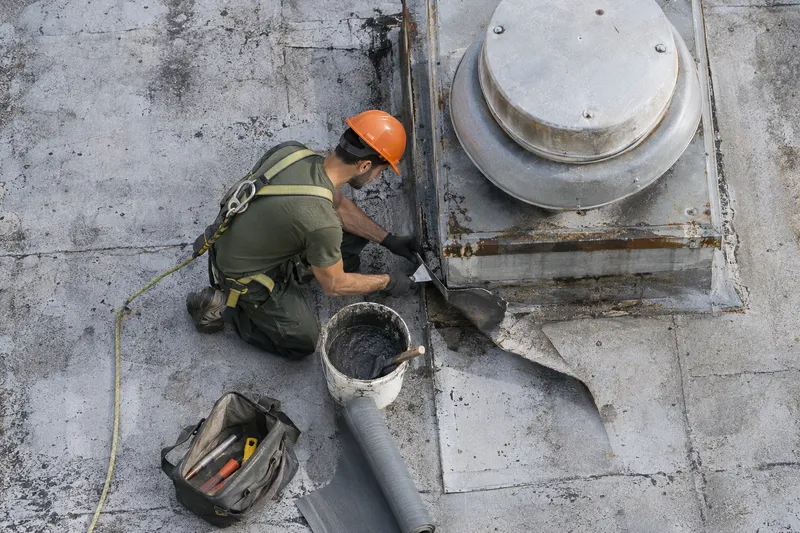
Plant roofs repaired in sections around exhaust fans, ductwork, and production lines below, with each opening closed watertight before the crew leaves.
Industrial roof repair in Bridgeport| Building Type | Flat Roof Repair | Metal Roof Repair | Leak Repair | Industrial Repair |
|---|---|---|---|---|
| Brick mill buildings | Parapet and coping flashing | Rarely | Wall-line leaks traced | Old plant roofs in sections |
| Marine supply warehouses | Ponding and drain repairs | Salt-rusted laps and screws | Leaks over stored stock | Rarely |
| Retail strips | Seams and curb flashing | Rarely | Ceiling stains over tenants | Rarely |
| Plants and shops | Membrane around equipment | Panel and fastener repairs | Rarely | Exhaust fan curbs |
| Offices and mixed-use | Flashing at masonry walls | Rarely | Wind-driven rain at coping | Rarely |
Five parts of a commercial roof cause most of the leaks we trace. This is what each one looks like when it starts to fail.
Mill buildings and older storefronts carry brick parapets topped with coping. Open coping joints and cracked wall flashing let wind-driven rain into the wall above the roof line.
Seams on TPO and EPDM open where the roof flexes over deck joints or where foot traffic crosses. A split often hides under dirt until a downpour finds it.
Leaves, gravel, and winter ice clog drain strainers. When the drain backs up, water climbs above flashing heights and reaches seams that stay dry in light rain.
Curb corners, pipe boots, and pitch pans crack as units vibrate and the roof moves with the seasons. Condensate lines dripping on the membrane wear it thin.
Insulation under a long-running leak soaks up water and spreads it sideways. Core cuts show how far the wet area reaches before we size the repair.
Every repair follows the same five steps, so you know what is happening on your roof and what it costs before work starts.
Inside the building, we note every drip, stain, and wet ceiling tile, then match each one to the roof area above it and upslope of it.
Up top, seams, curbs, drains, and flashing near each mark get checked by hand. Moisture readings or a core cut confirm whether the insulation below is wet.
You receive photos and a written repair list that separates urgent work from items to watch, with a price on each line before any work begins.
Patches match the existing system: heat-welded TPO, primed EPDM tape, new plies on built-up roofs, or matching metal panels and oversized fasteners.
Before the crew leaves, every opening is sealed watertight, drains are cleared, and the repaired areas are photographed for your building file.
Call with the building address and where the stain shows. We will set a time to trace it on the roof.
Schedule Your Free InspectionThe left column is what owners call us about. The right column is what the roof looks like once the repair is closed out.
What sits under the membrane decides the answer. Core cuts and moisture readings tell us which column your roof belongs in.
| Most CallsRepair | Section Replacement | Full Replacement | |
|---|---|---|---|
| Damage | One puncture, split, or failed seam | Damage across one bay or roof area | Leaks moving across the whole roof |
| Insulation | Dry around the damage | Wet in one area, dry elsewhere | Wet over large areas |
| Membrane or panels | Flexible and holding seams | Worn in one section | Brittle, shrinking, or rusted through |
| Deck | Solid | Solid, with local damage | Damaged or sagging |
Repairs and section replacements are the work we do. When the findings point to a full roof, the report says so and shows the core-cut results.
Mill buildings, waterfront warehouses, retail centers, and barns in these towns are where we repair roofs most. Elsewhere? Call us or send us a message.
| Town | County | What We See On Roofs There |
|---|---|---|
| Bridgeport Home Base | Fairfield County | Brick parapets on mill buildings and salt-rusted trim near the harbor |
| Stratford | Fairfield County | Large flat warehouse roofs with clogged drains and wind-lifted edge metal |
| Fairfield | Fairfield County | Wind-driven rain behind coping on masonry offices and mixed-use buildings |
| Southport | Fairfield County (village in the Town of Fairfield) | Corroded trim and tired wall flashing on older waterfront buildings |
| Trumbull | Fairfield County | Ice at drains and split seams on retail centers and office parks |
| Easton | Fairfield County | Exposed-fastener metal roofs on barns and equipment buildings |
Split seams, failed flashing, torn membrane, loose or rusted metal panels, and broken drains on flat, metal, and industrial roofs. Most visits begin by finding the entry point, since the stain inside rarely sits under it. If a roof has reached the point where repair money is wasted, the inspection report says so.
Yes, when the roof around it is dry. We cut out the damaged membrane or swap a few metal panels, then core-cut beyond the edges to see whether water has spread. Wet insulation found that way comes out with the repair, so the new section sits on a dry base.
Price follows what the inspection finds: how many areas leak, which roof system you have, how much insulation is wet, and how much flashing and curb work is involved. Height and street access matter too, since a tall downtown building needs more staging than a one-story shop. Each repair is priced line by line.
Repair when damage sits in one area and the rest of the roof is dry and holding its seams. Replace when leaks move around, seams fail roof-wide, or the deck is damaged. Core cuts and a moisture survey settle the question, and you see those results before deciding.
The lease decides. Some leases assign roof repairs to the landlord, others give routine repairs to the tenant and replacement to the landlord, and some pass roof costs through common-area charges. Read the repair clause before scheduling work. This is general information and is not legal advice.
Old brick soaks up water, and the joint between roof and wall moves with every season. Leaks start at cracked wall flashing, open coping joints, and mortar that lets water into the wall above the roof line. The repair rebuilds that flashing and coping and checks the insulation along the wall.
Tell us where the water shows up and what kind of roof is overhead. We will inspect it and price the repair.