Flat Roof Patch vs Replacement
Damage in one spot on a dry roof gets a patch of the same membrane. Patches stop paying off when they pile up or the membrane turns brittle.

Membrane and Built-Up Roofs
As a Bridgeport flat roof repair contractor, we patch TPO, EPDM, and built-up roofs with matching material and fix the drains behind most ponding.
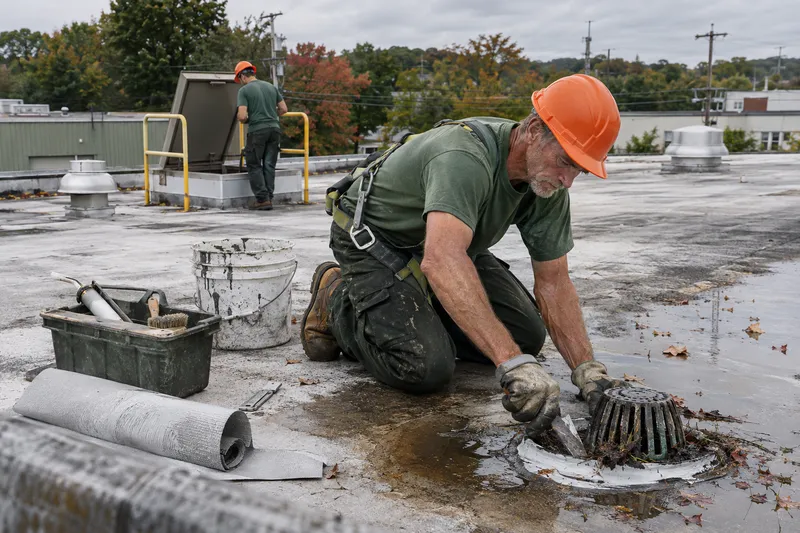
Bridgeport flat roof repair fits most roofs where the damage is local. Find your roof's condition in the columns below.
| What We Do MostPatch or Seam Repair | Section Repair | Replacement Talk | |
|---|---|---|---|
| What you see | A split, puncture, or open lap | Soft spots or ponding over one bay | Leaks in many places at once |
| Membrane | Flexible and fully adhered | Worn in one area | Brittle, shrinking, or blistered roof-wide |
| Insulation | Dry at the core cut | Wet under one section | Wet across most cores |
| The work | Matching patch, welded or taped | Cut out, dry in, new membrane | Findings shown and replacement discussed |
Patches and section repairs cover most flat roofs we see. When core cuts show wet insulation across most of the roof, the report says so with photos.
Five spots on a flat roof account for most of the water we chase. Each one fails in its own way.
Base flashing pulls away where the membrane turns up the parapet, and wind lifts loose edge metal. Both let water run behind the membrane at the wall.
Heat-welded TPO laps fail where the weld ran cold, and EPDM tape seams peel as the adhesive ages. Probing every lap near the leak finds them.
Water still sitting two days after rain wears the surface and finds any open seam. Low spots deepen as wet insulation compresses under them.
Corners of rooftop unit curbs and the clamps on pipe boots crack first. Pitch pans dry out and pull away from the pipes they seal.
Clamping rings loosen, strainers go missing, and leaves pack the bowl. A backed-up drain puts water over flashing that sits too low.
The fix depends on what failed. These four cover most of the flat roofs we open up.
Damage in one spot on a dry roof gets a patch of the same membrane. Patches stop paying off when they pile up or the membrane turns brittle.
New clamping rings, strainers, and drain flashing go in, and the bowl is cleared to the leader. A drain set too high is lowered so water reaches it.
Tapered insulation and crickets build up the low area so water moves toward a drain. Seams inside the old ponding ring are checked and resealed.
Torn or loose base flashing at walls is cut back and replaced, with termination bar and counterflashing set so wind has no gap to drive rain behind.
The left column lists flat roof conditions we get called about. The right column is the roof after the repair.
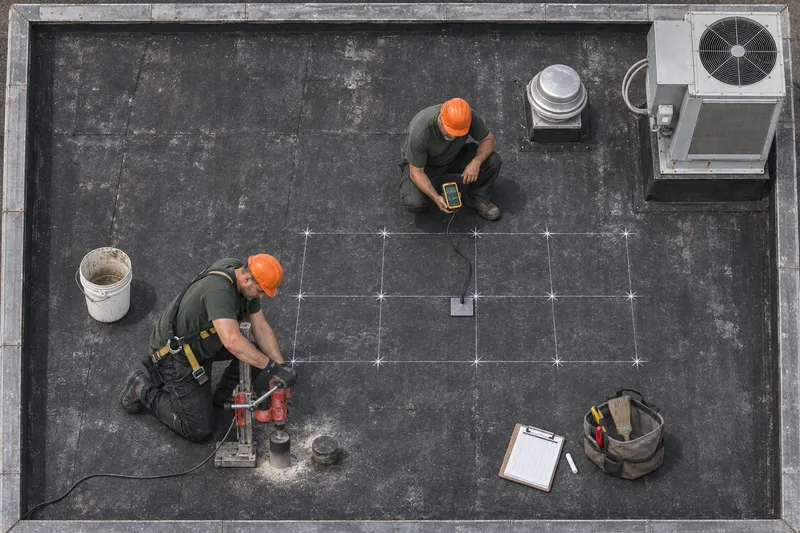
Ponding that stays two days or more is worth a look. Call, and we will check the drains and the seams around it.
Get A Free EstimateDrains first, then seams, then what is under them. The order keeps us from patching a symptom.
Drains come first, because a blocked bowl explains many flat roof leaks. Strainers are pulled, bowls cleared, and flashing heights measured against the water line.
Every lap near the leak gets run with a seam probe. On TPO we look for cold welds, and on EPDM for tape lifting at its edges.
A small core cut beside the leak shows whether the insulation is wet. More cuts outward mark where the wet area stops.
TPO is cleaned and heat-welded, EPDM is primed and taped, and built-up roofs get new plies. Wet insulation comes out first and dry board goes back.
Repaired seams and drains get a controlled water check where it is safe, then photos for your building records.
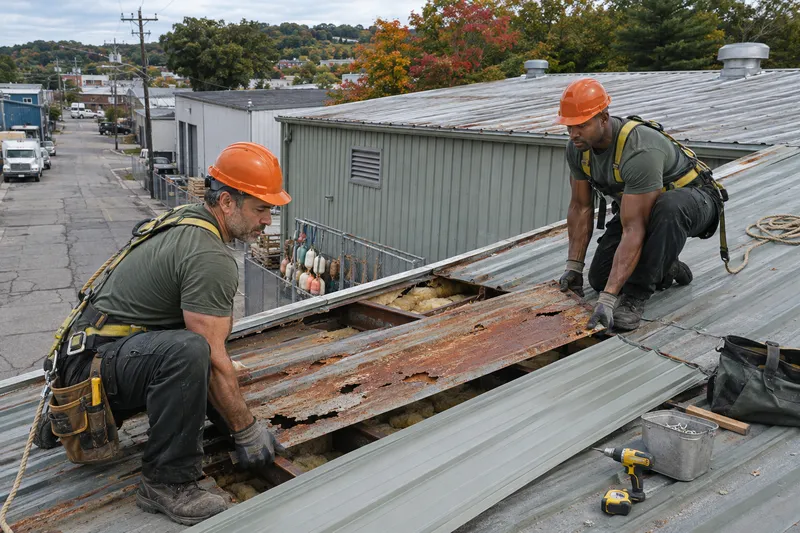
Some flat-roof buildings carry metal canopies or a steel addition. Those panels, laps, and screws get their own repair.
See commercial metal roof repair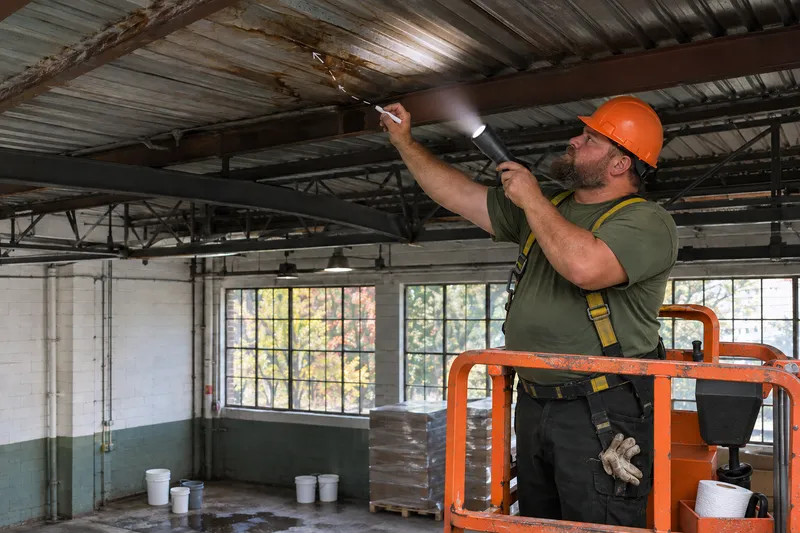
When a stain inside has no obvious cause on the membrane, leak tracing finds the path before anything is cut.
See commercial roof leak repair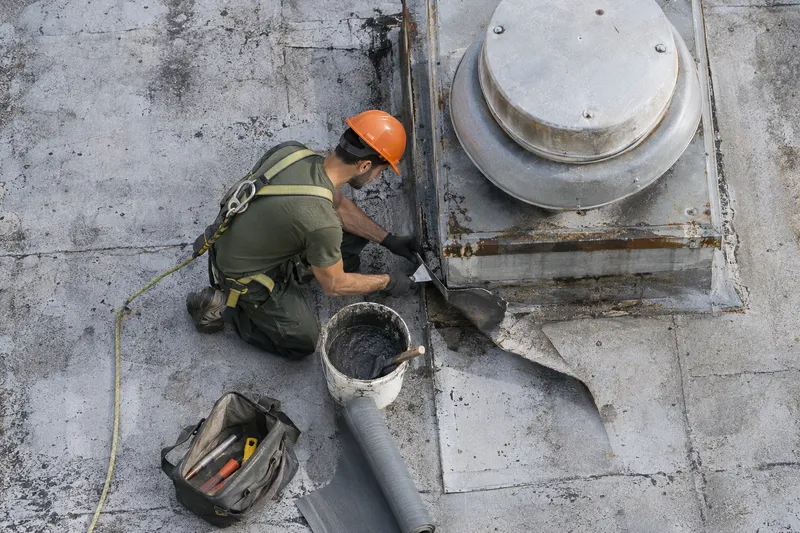
Plant roofs with exhaust fans and ducts need membrane repairs planned around production and hot equipment.
See industrial roof repairHeavy rain fills the roof faster than a partly blocked drain can empty it. The water rises over low flashing or reaches a seam that sits above the usual water line. Wind-driven rain can also push under loose counterflashing. Clearing the drains and checking flashing heights is where the repair begins.
Match the membrane already there. TPO gets a heat-welded TPO patch, EPDM gets primer and EPDM seam tape, and built-up or modified roofs get new plies. A patch of a different material tends to let go at its edges. The cause, such as a drain or loose flashing, gets fixed in the same visit.
Snow melts on the warm roof and refreezes at the cold parapet edge and around drains. The ice holds meltwater against seams and flashing until it rises over the top. We repair the damaged flashing, clear the drains, and raise flashing heights where water keeps backing up.
The membrane type, the size of the area cut out, how much insulation is wet, drain and flashing work, and how many roof layers sit on the deck. Roof height, access, and debris removal count too. A clean patch on a dry roof costs a fraction of a repair that turns up soaked insulation.
That depends on the scope. The Bridgeport Building Department issues permits through the city's Park City Portal, and permitted work follows the 2022 Connecticut State Building Code. We check with the department before starting. This is general information and is not legal advice.
Send the address and tell us where water sits or drips. We will check the drains and seams and price the fix.