How to Fix Leaking Screw Holes in a Metal Roof
Failed screws come out and oversized fasteners with new washers go in, sealing the enlarged holes. Rows with many failures are replaced in one pass.

Steel Panel Roofs
As a Bridgeport commercial metal roof repair contractor, we replace failed screws, seal panel laps, and swap rusted panels on steel buildings.
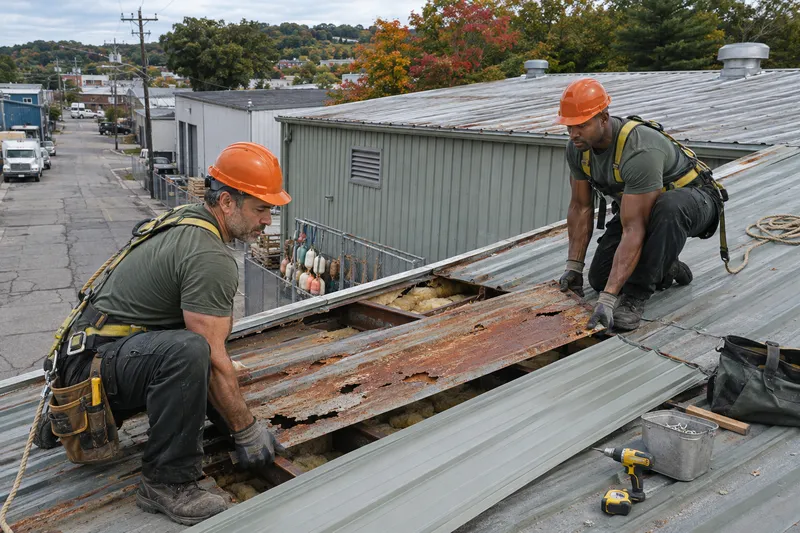
Bridgeport commercial metal roof repair covers most steel roofs with local damage. Compare your roof with the three columns.
| What We Do MostFastener and Lap Repair | Panel Replacement | Larger Plan | |
|---|---|---|---|
| What you see | Drips along screw rows or at laps | One or a few panels rusted through | Rust-through across many panels |
| Metal | Firm, with surface rust only | Flakes or flexes under foot in spots | Thin and failing across the roof |
| Framing | Solid purlins | Solid purlins | Rusted or sagging framing |
| The work | Oversized screws, new washers, sealed laps | Matching panels fastened into sound framing | Findings shown and a larger plan discussed |
Fastener and lap work fixes most steel roof leaks. Rusted framing or rust-through across many panels gets documented with photos before any larger plan is discussed.
Steel roofs leak at their joints and penetrations long before the panels themselves give out.
Eave trim corrodes from the cut edge back, and gutters clogged with leaves push water up under the first panel row.
Sealant in the laps dries and cracks as panels expand and contract. Water then wicks along the lap and drips well away from where it entered.
Rubber washers harden and screws back out with every heat cycle, leaving an open hole at each one. A single bad row can drip along the whole wall.
Fiberglass skylight panels crack, and curb flashing sealed with caulk alone opens up. Both sit low in the panel flute where water runs.
Closures under the ridge cap shrink and fall out, letting wind push rain in. Wall flashing where the roof meets a masonry wall pulls loose.
Metal repairs are mechanical first. Sealant supports a good fastener and lap, and never replaces one.
Failed screws come out and oversized fasteners with new washers go in, sealing the enlarged holes. Rows with many failures are replaced in one pass.
Panels rusted through are removed and replaced with the same profile, fastened into sound framing, and lapped with fresh sealant. Profiles are matched by rib height and spacing.
Laps are opened where needed, cleaned of old sealant and rust, then resealed and stitched with new fasteners so the joint stays closed through the next freeze-thaw season.
Near the harbor, salt is washed off and rust treated before any repair, and trim and fasteners go back in corrosion-resistant metal.
These are the metal roof conditions we see most, and what the roof looks like after the repair.
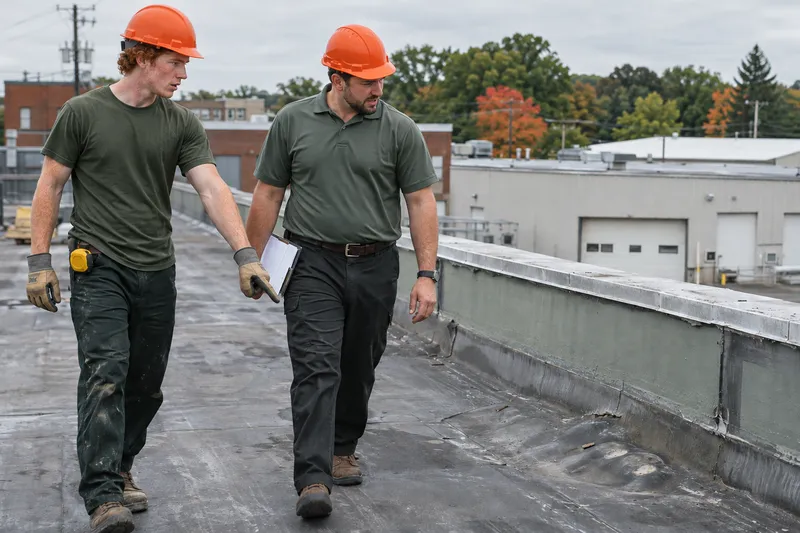
That pattern points to failed washers. Call and we will check the fastener lines and laps on your roof.
Get A Free EstimateMetal roofs get checked from the eave up, row by row, so no failed fastener line gets skipped.
Each screw row is checked for backed-out heads, cracked washers, and rust bleeding from the hole, starting at the eave.
Side and end laps near the leak are inspected for dried sealant and rust. Water marks on the purlins below show which laps carry it.
Rusted panels are tested under foot, and purlins are checked where screws will go back in, since a new screw needs solid steel.
Oversized screws replace failed ones, laps are resealed and stitched, and rusted-through panels come out for matching new ones.
Ridge closures, skylight laps, and wall flashing get finished last, then the repaired rows are photographed for your file.
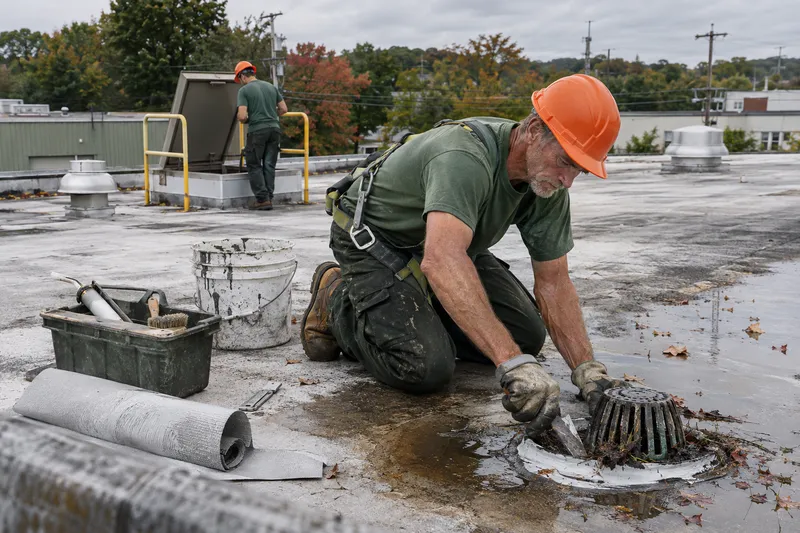
Metal buildings with a flat-roof office wing or loading dock canopy need membrane and drain repairs there.
See flat roof repair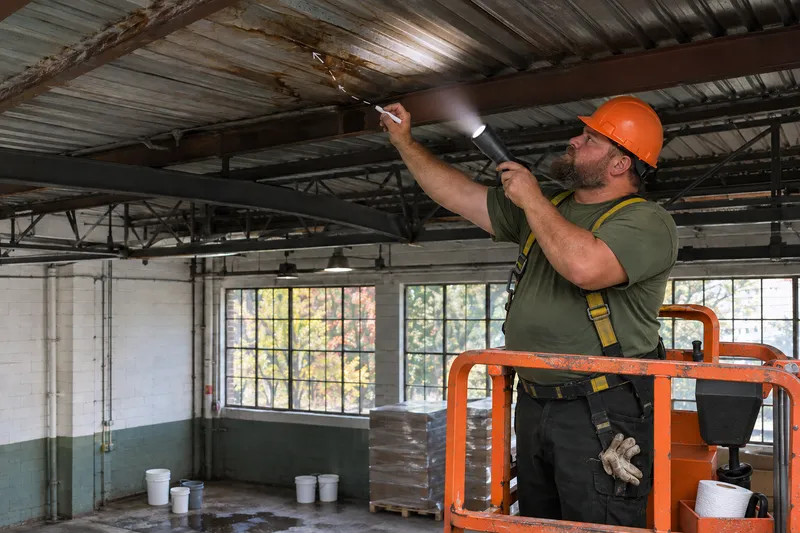
Leaks inside a steel building can travel along purlins. Tracing confirms which lap or screw row is responsible.
See commercial roof leak repair
Steel plant roofs with exhaust fans and ductwork add curb and residue repairs to the fastener work.
See industrial roof repairFasteners. Washers dry out and screws back out as panels move with heat and cold, so every row turns into a line of small holes. Laps, ridge caps, and wall flashing come next, and near the shoreline, rust at laps and cut edges joins the list.
Yes, in most cases. Fasteners, laps, flashing, and individual panels are all repairable. Rust-through across many panels or rusted framing calls for a bigger plan, and the inspection report spells that out with photos.
Replace a panel once rust has eaten through, the steel flexes or flakes under foot, or it no longer holds a screw. Surface rust gets cleaned, treated, and sealed instead. Matching profiles keep the laps tight.
Yes. Near Bridgeport Harbor, salt speeds rust on fasteners, trim, and curbs. Repairs there start by washing off salt and treating rust, then use corrosion-resistant fasteners and coated or stainless trim.
Wind lifts ridge caps and edge trim, pulls panels with failed fasteners, and drives rain under loose flashing. The roof is secured first to stop more water, then panels are refastened or replaced and the trim reset.
Standing-seam roofs hide their fasteners in clips under the seams, so leaks usually start at end laps, ridge and eave trim, or penetrations instead of screw rows. Repairs reseal those details and replace damaged panels with the same seam profile.
Sealant over a loose screw or open lap holds for a season or two, then lets go as the panels keep moving. The lasting repair tightens the joint mechanically first, with oversized screws or stitched laps, and uses sealant to finish it.
Tell us the building type and where the drips line up. We will check the screw rows and laps and price each repair.