Roof Repair Around Exhaust Fans
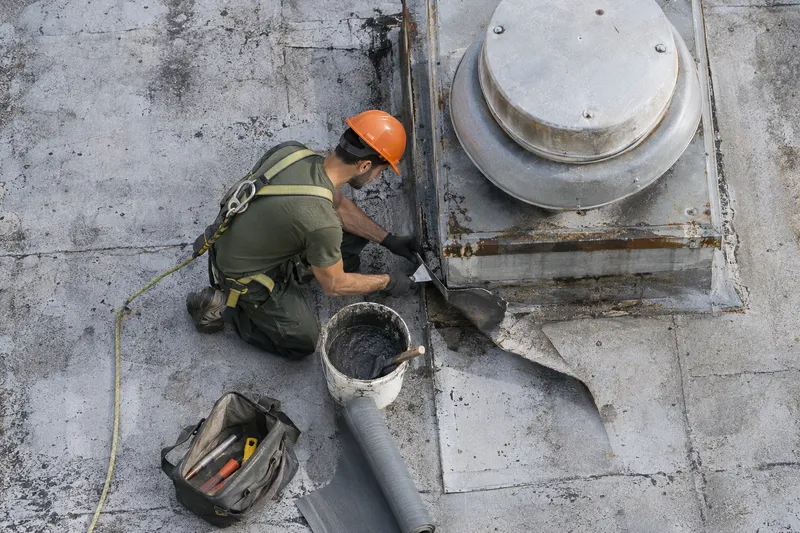
Curb flashing is rebuilt, damaged membrane is replaced with a material rated for the exhaust, and protection goes down where residue lands, so the next round of exhaust does less harm.

Plant and Shop Roofs
As a Bridgeport industrial roof repair contractor, we repair plant roofs in sections around exhaust fans, ductwork, and the production lines below.
Bridgeport industrial roof repair is sized by what the inspection finds around equipment and across the field.
| What We Do MostSection Repair | Equipment Area Rebuild | Roof-Wide Plan | |
|---|---|---|---|
| What you see | Leaks in one bay or along one path | Membrane worn around fans and ducts | Wet insulation across many bays |
| Cause | Punctures, seams, or one curb | Heat, vibration, grease, or residue | Age and long-running leaks |
| Production | Work around it in small openings | Work scheduled with plant staff | Phased plan reviewed with you |
| The work | Matching patch or section repair | Curb flashing, rated membrane, protection pads | Findings shown and phasing discussed |
Large plant roofs get repaired in phases where the budget or production calls for it, starting with the areas over the most sensitive equipment.
Plant roofs carry more equipment and more foot traffic than most. These five areas wear out first.
Fans vibrate and run hot, and some vent grease or chemicals onto the roof. Flashing and membrane around them break down faster than the field.
Duct supports sitting on the membrane cut into it as they move, and duct seams drip condensation onto the same spot for years.
Service crews walk the same route to the units, wearing through the surface and puncturing it with dropped tools and screws.
Big roofs have long seam runs, and a single failed lap over a production line can drip on equipment far from where it started.
Large roofs drain to interior bowls that collect residue and debris. A slow drain lets water back up across a wide area.
Plant roofs need repairs built for heat, vibration, and residue, with the work planned around what runs below.
Curb flashing is rebuilt, damaged membrane is replaced with a material rated for the exhaust, and protection goes down where residue lands, so the next round of exhaust does less harm.
Leaks over production are traced, temporary repairs go on first where equipment is at risk, and permanent repairs follow in small sections, each closed before the next opens.
Drains and gutters cleared, seams and curb flashing checked, metal fasteners tightened, and debris removed on a spring and fall schedule.
A full walk of membrane or panels, seams, curbs, drains, and edges, with core cuts and a photo report sorted by what needs repair now.
These are the conditions plant managers call about, set beside the roof after the repair.
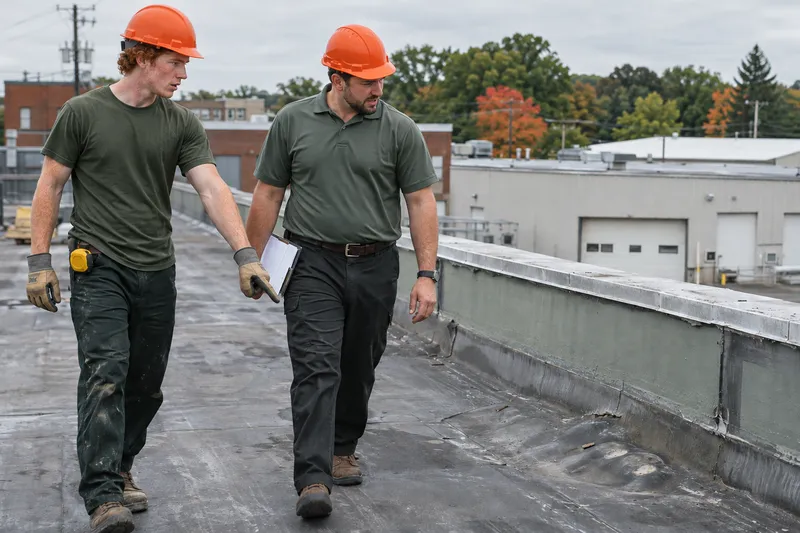
Call with the plant address and the area affected. We will plan the inspection with your staff around what runs below.
Get A Free EstimateIndustrial repairs work around the plant, so planning with your staff comes before any roof is opened.
We agree on roof access, hot work rules, and which areas below need covering, and note any exhaust that runs during the work.
Membrane or panels, seams, curbs, drains, and edges all get walked, with extra time around fans, ducts, and service paths.
Equipment and product under any opening are covered before we cut, and openings stay small enough to close quickly.
Each section is repaired with materials rated for its exposure and closed watertight before the crew leaves the roof.
Photos, repaired areas, and items to watch go into a report your maintenance staff can use for spring and fall checks.
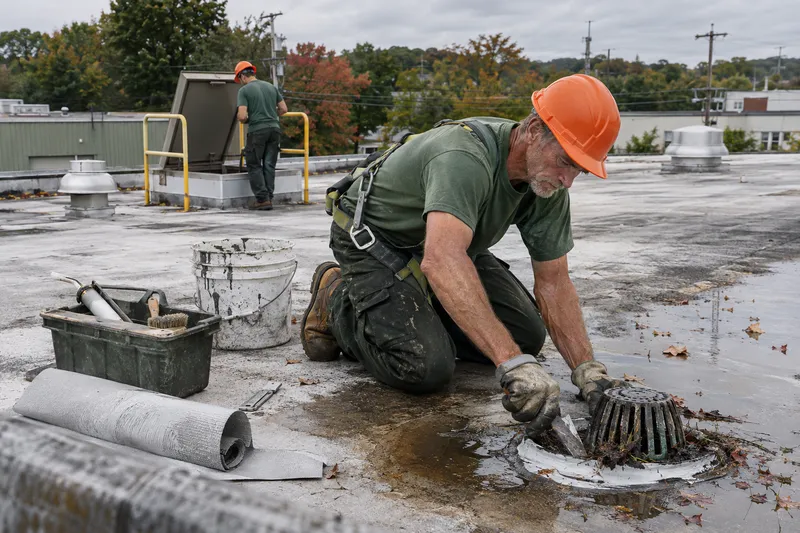
Most plant roofs are low-slope membrane, so drain, seam, and base flashing repairs often go with the equipment work.
See flat roof repair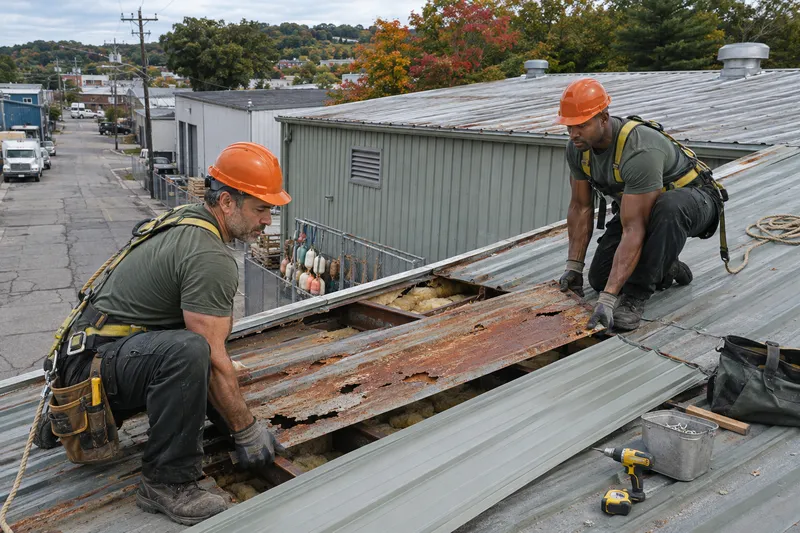
Steel plant buildings and shop additions add fastener, lap, and panel repairs to the job.
See commercial metal roof repair
Leaks that land far from the equipment get traced along the deck before repair.
See commercial roof leak repairLeaks on large plant and shop roofs, damage around exhaust fans and ductwork, wear along maintenance paths, and membrane or metal failures from heat and vibration. Work runs in sections around production with equipment covered first.
Equipment and product are covered first, roof openings are planned with plant staff, and work moves in small sections. Where a leak sits over sensitive equipment, a temporary repair goes on so production can keep running until the permanent repair is scheduled.
A walk of the full roof covering membrane or panels, seams, flashing at walls and curbs, drains, edge metal, and the area around equipment, plus core cuts or moisture readings. You get photos and a list split into repair-now and watch items.
Spring and fall checks catch winter and storm damage early. Each visit clears drains, checks seams and curb flashing, tightens metal fasteners, and removes debris, with a record kept for each roof area.
Heat, vibration, and grease or chemical exhaust break down membrane and flashing faster than anywhere else on the roof. The repair uses a membrane rated for that exhaust and raises curb flashing so snow and ponding stay below it.
Torch-applied repairs and heat welding count as hot work at many plants. We follow the plant's hot work rules and switch to cold-applied or mechanical methods where open flame is off limits near equipment or stored material.
Grease breaks down many membranes, so the area under the fan gets a grease-resistant membrane or a protection pad, plus a containment box at the fan outlet where the plant allows. The curb flashing is raised and sealed at the same time.
Tell us about the plant, the equipment on the roof, and where the leaks show. We will plan the inspection with your staff.