Fairfield Commercial Roof Repair Cost
Coping and flashing work is priced by the length of wall involved, plus any wet insulation along it and lift or ladder access for taller buildings.

Fairfield, CT
As a Fairfield commercial roof repair contractor, we stop wind-driven rain at coping, counterflashing, and trim on masonry offices, retail, and mixed-use buildings.
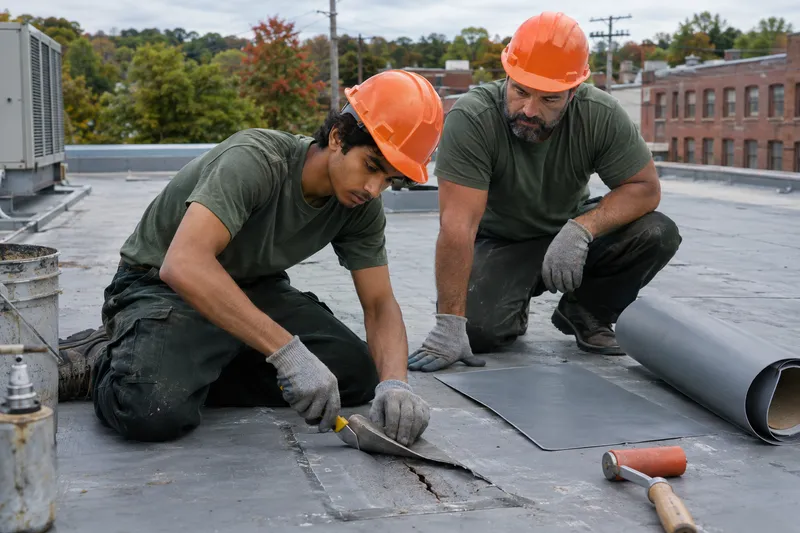
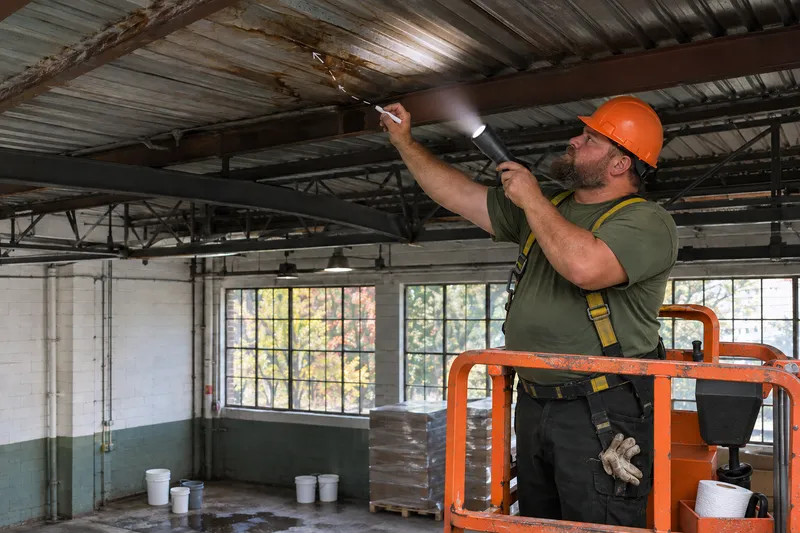
Fairfield commercial roof repair on masonry buildings often means chasing rain that wind drove sideways, behind loose counterflashing, through open coping joints, and up under lapped metal trim.
These leaks tend to show inside along an outside wall during storms and stay dry in calm rain, which makes them easy to blame on the wrong part of the roof.
Wind-driven leaks start at the top of the wall more often than in the middle of the roof. Here are the five spots.
Stone and metal coping caps open at their joints, and wind drives rain straight through into the parapet core and down the inside of the wall. Sealant joints between caps are the usual first failure.
Reglet counterflashing set into the brick loosens as mortar ages. Storm gusts lift it and push water behind the base flashing. Resetting it in fresh sealant closes the path.
Trim laps facing the wind take water uphill under the lap, and loose fasteners let the trim flutter and widen the gap.
Where the membrane turns up the wall, seams and terminations pull loose as the masonry and the roof move at different rates. Termination bar screws loosen in the old mortar.
Small leaks at walls run for months before showing, soaking a strip of insulation that has to come out with the repair.
Wall-line leaks have a familiar pattern. Here is how a Fairfield building looks before the repair and after it.
What Fairfield owners and managers ask about before a wall-line repair, answered card by card.
Coping and flashing work is priced by the length of wall involved, plus any wet insulation along it and lift or ladder access for taller buildings.
Fairfield borders Bridgeport to the west, so offices, retail, and mixed-use buildings there sit inside our regular inspection area.
Building owners and property managers get the same written repair list with photos, sorted into work needed now and items to watch.
After a storm, lifted trim and coping are secured first to stop more water, then the joints are sealed and the flashing rebuilt.
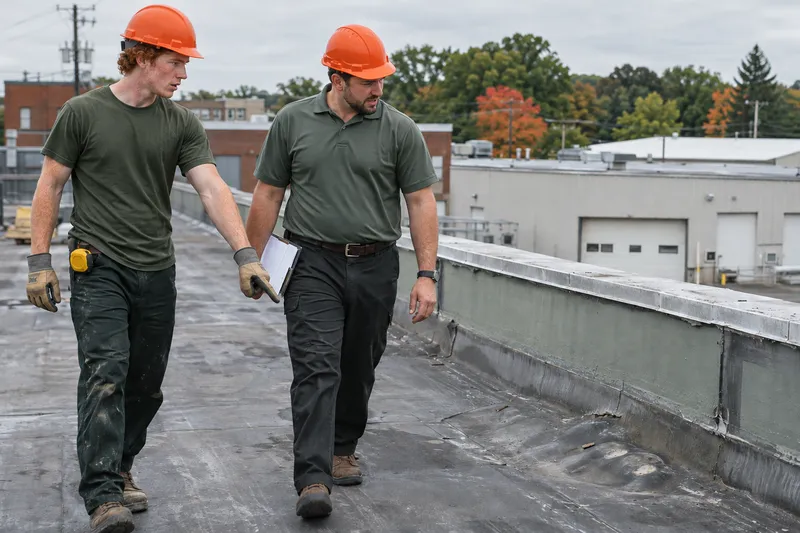
That pattern points to the parapet. Call and we will check the coping, counterflashing, and trim above it.
Get A Free EstimateWind-driven leaks need the storm pattern first, then a close look at the wall top.
Leaks that appear only with wind from one direction point to the wall facing it. Dates and wind direction help narrow the search.
Coping joints, cap fasteners, and sealant get checked along the full length of the wall, including stretches away from the stain.
Reglets, counterflashing, and trim laps are checked for loose fasteners and open joints where gusts can drive water.
Joints are resealed, loose counterflashing reset or replaced, trim refastened, and wet insulation along the wall cut out.
Ask staff to check the wall after the next windy rain. A dry wall line confirms the repair held.
Fairfield borders Bridgeport to the west, and we take the same inspection and repair work to the towns around it.
| Town | County | What We See On Roofs There |
|---|---|---|
| Bridgeport Home Base | Fairfield County | Brick parapets on mill buildings and salt-rusted trim near the harbor |
| Stratford | Fairfield County | Large flat warehouse roofs with clogged drains and wind-lifted edge metal |
| Southport | Fairfield County (village in the Town of Fairfield) | Corroded trim and tired wall flashing on older waterfront buildings |
| Trumbull | Fairfield County | Ice at drains and split seams on retail centers and office parks |
| Easton | Fairfield County | Exposed-fastener metal roofs on barns and equipment buildings |
Strong wind off Long Island Sound pushes rain sideways, under loose counterflashing, through open coping joints, and up under lapped trim. Repairs reseal those joints and refasten the metal so gusts have nowhere to drive water.
Calm rain falls on the roof and drains away. Wind-driven rain hits the parapet and wall flashing sideways and finds joints that stay dry the rest of the time, which is why these leaks come and go.
The Town of Fairfield building department. Whether a repair needs a permit depends on its scope, and we check with the town before starting. This is general information and is not legal advice.
Often, yes. Joints are resealed and caps refastened where the coping itself is intact. Cracked stone or bent metal caps get replaced piece by piece instead of the whole run.
When trim or coping has lifted, it is secured first so more water stays out. The permanent repair to the joints and flashing follows on a dry day.
Sometimes. Old brick and mortar absorb water, and a wet wall can stain inside just like a roof leak. A water test on the flashing and a look at the masonry separate the two before any repair.
Masonry offices, retail, and mixed-use buildings with parapets facing the water or open ground. Taller walls catch more wind, and older coping joints have had more seasons to open.
The drains, field seams near the wall, and rooftop unit curbs get a look too, since a second leak source near the wall can keep the stain coming back after the coping is sealed.
Tell us which wall shows the stain and when it appears. We will check the parapet top and price the repair.